Keynote Speakers
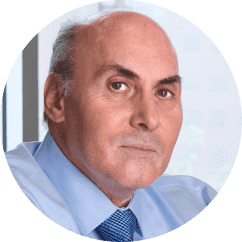
Drew Weissman, USA
Lecture Title: Nucleoside Modified mRNA-LNP Therapeutics
4th November 2026
Drew Weissman, MD, PhD, is the Roberts Family Professor in Vaccine Research and director of the Penn Institute for RNA Innovation at the Perelman School of Medicine. He is recognized for his work alongside Katalin Karikó in discovering the modified mRNA technology, which has launched a new era of vaccine and therapeutic development. Their mRNA research breakthrough has been used in both the BioNTech/Pfizer and Moderna COVID-19 vaccines and has revolutionized the field of vaccine development. Dr. Weissman’s current research focuses on developing a pan-coronavirus vaccine to stop the next coronavirus epidemic, a universal flu vaccine, cancer therapeutics, a vaccine to prevent herpes, as well as developing in vivo gene therapy to allow worldwide use and a variety of protein therapeutics delivered with mRNA-LNPs. He has recently expanded his efforts in building scientific and medical equity and is developing the full RNA-LNP ecosystem of development, testing, and use in low and middle income countries.
Dr. Weissman earned bachelor’s and master’s degrees in biochemistry and enzymology from Brandeis University in 1981 and his M.D. and Ph.D. in immunology and microbiology in 1987 at Boston University School of Medicine. Following a residency at Beth Israel Hospital in Boston, he took a fellowship at the National Institutes of Health, where he worked with Dr. Anthony Fauci.
Dr. Weissman hold many patents and has published over 400 papers. He has been recognized with numerous awards including the Lasker-DeBakey Clinical Medical Research Award, the Breakthrough Prize in Life Sciences, the Albany Medical Center Prize in Medicine and Biomedical Research, and the Nobel Prize in Medicine or Physiology.
Célia M. Manaia, Portugal
Lecture Title: Environmental Antimicrobial Resistance: Both Symptom and Risk
4th November 2026
C. Manaia is a Full Professor at the Escola Superior de Biotecnologia, Universidade Católica Portuguesa. Her research focuses on the ecology of bacteria and their resistance to antibiotics in the urban water cycle, particularly in wastewater environments. She has published extensively and has made significant contributions to global efforts to combat antimicrobial resistance in the environment (ORCID iD 0000-0002-3674-1789).
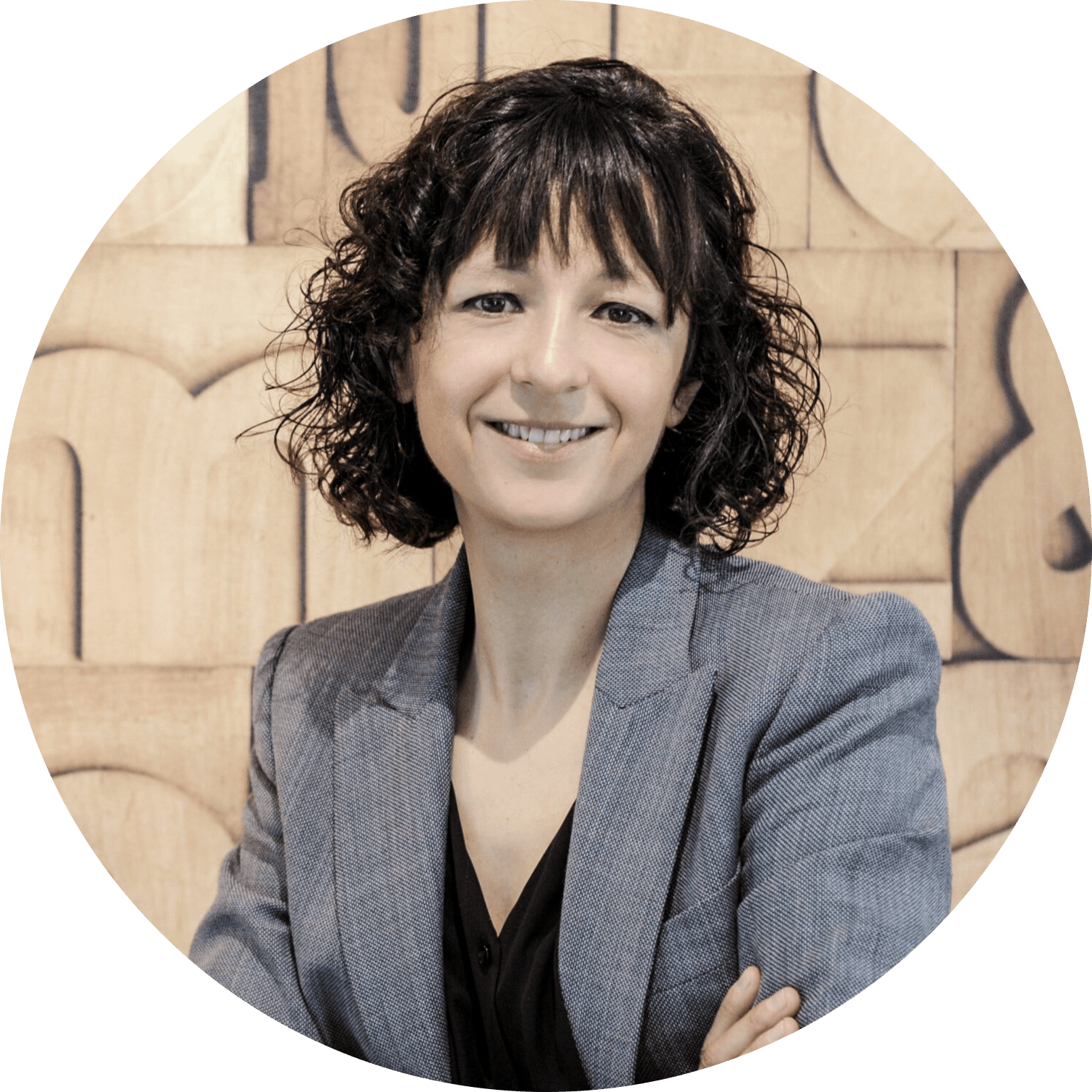
Emmanuelle Charpentier, Germany
Lecture title: Transforming Life Sciences Through The Power Of Microbiology: The Example Of Gene Editing With CRISPR
5th November 2026
Emmanuelle Charpentier is a French microbiologist, geneticist and biochemist. She is founder, scientific and managing director of the Max Planck Unit for the Science of Pathogens in Berlin. She is co-founder of CRISPR Therapeutics and ERS Genomics with Rodger Novak and Shaun Foy. She has received numerous prestigious international awards and honors, and is an elected member of national and international scientific academies. More information about Emmanuelle is available at http://www.emmanuelle-charpentier.org/

Toni Gabaldón, Spain
Lecture title: The Long and Winding Road to the Origin Of Eukaryotes
6th November 2026
Toni Gabaldón is ICREA Research Professor jointly affiliated to the Institute for Research in Biomedicine (IRB) and the Barcelona Supercomputing Centre (BSC), where he leads the Comparative Genomics group (www.cgenomics.org). He studied Biological Sciences in Valencia (Spain) and Mainz (Germany) and obtained a PhD in the Medical Sciences by the Radboud University in Nijmegen (The Netherlands). He previously worked as a postdoctoral researcher in the CIPF in (Valencia, Spain) and as a Junior Group Leader at the CRG (Barcelona, Spain).
Dr. Gabaldón has published over 300 publications and his work has received over 45000 citations (h- index=95). Dr. Gabaldón has received honors and awards such as the EMBO membership, the ERC starting and consolidator grants, and the Margaret Dayhoff award and is considered a highly cited researcher by clarivate analytics.
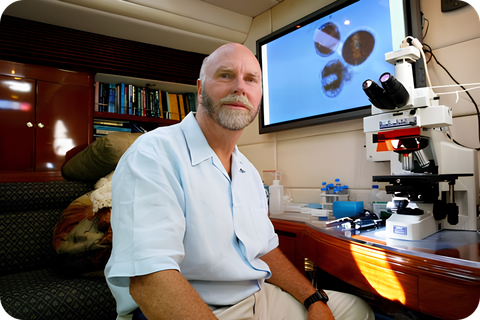
Craig Venter🧬
The Pioneer of Microbial Genomics and Diversity
It is with deep emotion that we share the news that Craig Venter, the pioneer of microbial genomics and diversity, passed away at 79 on April 29th 2026. He was expected to give a keynote lecture at the IUMS Meeting in Lisbon on November 6th.
It will be impossible to replace his talk, but we will do our best to make sure we will give the appropriate credit to his contribution by describing the innovative nature of a genius mind that in 2003 decided to sequence the genome of the water of the Sargasso sea to discover that 170 liters of water contained 1800 genomic species, 148 previously unknown bacterial phylotypes, 1.2 million previously unknown genes, including more than 782 new rhodopsin-like photoreceptors.
We want to honor his memory by showcasing a brief description of his contribution to the discovery of nearly infinite microbial diversity, as outlined in his book “The Voyage of the Sorcerer II.” This book narrates the adventures of Venter’s sailboat, which navigated the oceans from 2003 to 2018, starting from the Galapagos Islands and following in the footsteps of Charles Darwin. Venter’s quest was to explore the nature and evolution of microbes—those invisible living organisms that were too small for Darwin to consider.
The world revealed by Venter exceeds all previous imaginings, encompassing more than one trillion microbial species, each with its unique pangenome containing millions of related yet distinct microorganisms. This stands in stark contrast to the limited number of animals that Darwin studied. Even with access to supercomputers, Venter struggled to map microbial evolution, as it branched in every direction and across all environments without any apparent rules. Instead, it relied on mechanisms like horizontal gene transfer, phages, transposons, and plasmids to adapt to the countless environments.
The book also recounts interesting episodes involving local authorities from various states who hesitated to grant permission for sampling their waters due to concerns that Venter might uncover their hidden secrets. The overall conclusion of the book is that the microbial universe is far more expansive than we ever imagined, boasting incredible diversity and performing all essential functions necessary for life on our planet. Venter successfully immerses readers in this captivating and largely infinite universe.